


Mold in Kitchen
Causes of Mold in Kitchen
Mold can often be found growing in the kitchen. One reason why is because there's lots of moisture in the kitchen. For example, water from running taps and steam from boiling water. Another reason is there's always plenty of food in the kitchen for mold to start to grow on.To find out more causes of mold in the home go to the Mold Causes page.
Mold from Humidity in the Kitchen
If the humidity in your kitchen stays at a very high level for a long time it can cause mold to start to grow. Some of the big causes of humidity in the kitchen are steam from boiling the kettle, spilt liquids that aren't cleaned up which evaporate into the air and steam from cooking food or from washing dishes.To decrease your kitchen's humidity you should ventilate your kitchen regularly by opening windows or doors. Make sure to clean up any spilt liquid quickly too. Exhaust fans help to decrease the humidity caused by cooking.
There are more ways to prevent mold in the home at the Preventing Mold page.
Mold on Dishes in the Kitchen
If you don't wash up every day you'll probably see mold start to grow on used bowls and plates. For example mold can often grow in bowls from left over milk after you've eaten cereal.When dishes are stacked on each other after they've been used they often aren't able to dry out and mold can start to grow if given enough time.
The best thing to do is to wash up once a day to be sure to prevent mold growing on any left over food in dishes. It's also good to rinse dishes off right after you've used them too.
If you do come across mold growing on plates or bowls then simply washing them up like normal will be enough to remove the mold.
Mold in Kitchen Sink
You might notice mold growing in your kitchen sink. Since mold needs organic material to grow on, mold can only grow in your sink if there's left over food particles or a layer of grease or grime.If you have mold in your kitchen sink it should be easy to just scrub it away using water from the tap. Give the whole sink a clean too to make sure the mold doesn't come back.
Mold can also grow underneath the kitchen sink. Sometimes moisture can build up there from leaks or from condensation on the pipes.
Mold in Kitchen Sink Drain
If there's mold in the drain of your kitchen sink you may be able to get rid of it by removing the drain grate, if possible, and scrubbing down inside the drain. You might need to unscrew the drain pipe under the sink if you cannot reach the mold.Pouring drain cleaner or a mold killing product, such as vinegar or bleach, down the drain might work. However this might not kill all the mold since the solution might not come into contact with all the mold for long enough, depending on exactly where the mold is growing.
There is information on several effective mold killing products such as bleach, vinegar and borax at the Killing Mold page.
If you have a garbage disposal in your sink you should run it every day and clean it frequently. It's also good to pour a few cups of vinegar down there once a week to prevent mold and to kill off any existing mold growth.
Mold on Food in the Kitchen
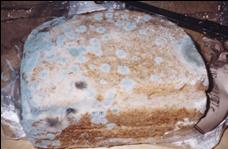
Rotting food such as fruit or vegetables is a favorite place for mold to grow. Look out for rotten food in places like the fruit bowl or the bottom of the fridge.
Mold in Kitchen Bin
Moldy food can often be found in the rubbish bin and compost bucket. It only takes a day or two before mold can start to grow on food scraps in the bin.This is why it's best to empty the bin every day. Using a bin that is about the same size as the volume of rubbish you accumulate in a day will help you to remember to empty it daily. It's also a good idea to use a bin with a lid.
The same goes for the compost bucket. Make sure to empty it out each day and always keep it covered.
Mold on the Cutting Board
Another surface that can accumulate mold growth is the cutting board. Moisture from cutting food as well as small food particles create a perfect area for mold to grow.Use vinegar to wash it off and then leave it for 10 minutes before you rinse it. You should do this about once a week to keep mold away.
Mold in Kitchen Fridge
Food that's left in the fridge for a long time can end up with mold on it.Often food near the bottom of the fridge is left out of sight and forgotten about and develops mold. Mold is especially common at the bottom of the fridge since it's not usually as cold and water often ends up there.
Regularly clean out your fridge to get rid of any mold. Check for any old food left in there such as rotting fruit and vegetables, or old bread.
The drip tray of the fridge can often end up with mold growth too. Frequently check it for mold.