


Mold in House on Walls, Ceiling, Windows
This page talks about places in the home where mold often grows such as:Below you can find out how to remove mold from these places, as well as the signs and causes of the mold.
Removing Mold on Walls
If you have mold on the walls in your home then it's usually easy to remove. If the wall is non-porous then you can simply wipe the mold away using a wet cloth. You can also use a mold killing product if you like. The killing mold page describes how to use mold killing products like bleach, vinegar, borax and more.However if the wall is porous, such as unpainted drywall, then you will usually need to cut away the wall where the mold is growing. This is because mold grows inside the material, instead of just on the surface, and so you can't remove it completely. This page describes how to deal with mold on different materials like drywall and wood.
The mold removal page also provides a complete step by step guide for removing large areas of mold growth in your home.
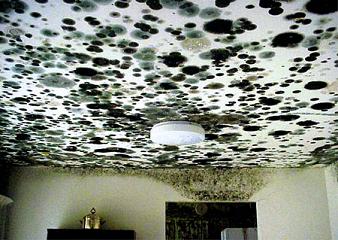
Mold growing on walls and ceiling in a house.
Mold on Drywall Walls
Because drywall is a substance high in cellulose, it is one of the most common materials mold grows on in the home. As there is no practical way to completely remove mold from drywall, you will have to cut out and dispose of any drywall you discover which has mold growing on it.Mold Growing Behind Walls
Mold commonly grows out of sight behind walls in the wall cavities. These spaces often contain pockets of humid, moist air. Mold can also grow hidden behind wallpaper. Wallpaper glue can hold organic debris which can then become a food source for mold growth.To find hidden mold behind walls you need to use invasive inspection methods and, optionally, mold testing. It's best to talk to a professional mold specialist in this case. To find out more visit Mold Inspection and Mold Testing.
Signs of Mold on Walls
Cracked or peeling paint, discoloration and bulging are all tell-tale signs that there could be moisture in a wall. If you notice any of these things in a wall in your home, take a closer look and you might see the beginnings of small amounts of mold growth.These signs could also indicate that mold is actually growing hidden behind the wall, in the wall cavity. Seeing small spots of mold on a wall can sometimes be a sign that there is actually a larger mold colony on the other side which is slowly growing through.
Smelling a moldy odor or suffering allergic reactions are also good indications there could be mold growing hidden behind a wall in your home. For more information on the symptoms caused by mold allergies visit Mold Symptoms.
To find out more about mold signs visit Signs of Mold in the Home.
How and Why Mold Grows on Walls
The most common causes of mold growing on walls are high humidity, condensation and water leaks (which are often hidden inside the wall).Condensation forms when water vapor in the air meets cold surfaces and cools to become liquid. Condensation is especially common on walls which form the perimeter of a house. These walls are often colder because of cool outdoor air on the other side.
Things like drying wet clothes inside or steam from hot water increases the humidity in the home. If humidity stays high in your home for a long time then you might see mold starting to grow on your walls. Usually the best way to decrease the humidity is to ventilate your home by opening windows and doors.
Leaking pipes near or inside of walls are a common cause of mold. If there's a leaking pipe inside a wall cavity then mold will usually be well and truly set in before it's discovered.
To find out more about what causes mold in the home visit Causes of Mold.
Mold on Ceiling
If you see mold on the ceiling in your home then you probably have a humidity or condensation problem. It is also possible that the mold is caused by a water leak above the ceiling.Removing Mold on Ceiling
Like with mold on walls, if the ceiling is made of a non-porous material then you can usually just wipe the mold away with a wet cloth. You can use a mold killing product like bleach if you like too.If the ceiling is made of a porous material though, like unpainted drywall, then you may have to cut away the material where the mold is growing since the mold has probably grown inside the material.
Mold Growing Above Ceiling
Just as mold grows behind walls you can also sometimes find mold growing on the other side of ceilings. Mold colonies growing above ceilings are usually fed by water from a leaking roof.For clues that mold could be growing above the ceiling in your home look for signs of water damage in the ceiling. Small patches of mold growth visible from under the ceiling can be a sign that there is a large colony of mold on the other side.
Mold on Windows and Window Frames
Condensation frequently forms on windows due to cold outdoor air on the other side of the window which cools the glass. Although mold cannot feed on the glass itself, if the window is dirty then mold can feed off of the grime on the window glass.Condensation can also lead to mold growing around window frames because of moisture condensating on the glass and then running onto the frame. The other place to watch out for mold growing around your windows is in the seal where the window frame meets the wall.
Mold in Floor
Mold can grow beneath the floor in your home just like it grows above ceilings and within wall cavities. Dirt and dust which fall under the floor become trapped, along with moisture, leading to perfect conditions for mold growth.Tiles and especially carpets trap large amounts of dust and can become a haven for mold growth. Carpets hold moisture particularly well, taking a long time to dry out, which means they can very easily foster mold growth if there are spilt liquids, water leaks or floods.
Mold on Furniture
Furniture made of organic materials, such as wood, are another thing that mold soon ends up growing on if there's a moisture problem in your home. Upholstered furniture in particular absorbs moisture, making it a prime candidate for mold growth.Your household furniture should not be kept close to, or touching, the walls as this diminishes the air flow and creates condensation. When you check your furniture for mold remember to check underneath pieces of furniture. Also look inside furniture like cupboards, drawers, etc.
Mold in Insulation
Insulation can be a reservoir for mold. Any insulation which you can see exposed in your home should be checked thoroughly for mold, especially if there was once a water problem in that particular room, or if there was once mold growth anywhere in the room. Even if the insulation looks clean at first glance make sure to thoroughly examine and inspect it.If you do end up finding any mold in the insulation inside your home you will have to remove and replace the affected insulation as it will be impossible to completely clean all the mold out from it.
Mold in Air Ducts and HVAC
Unseen mold could also be lurking in vents, ducts, air conditioning and heating systems in your home so don't forget to check inside these areas when you're looking for mold.Mold on Clothes
Mold can grow on the clothes in your home if they've been left wet for a long period of time. Clothes sitting in a wet pile for more than a day after being washed, or damp clothes left wet for more than a day while waiting to be washed can become moldy.For more information about mold on clothes, including removing mold from clothes visit Mold on Clothes.
Mold Growing in Basement
Out of all the rooms in the house the basement is usually the most likely to contain mold growth. Because the basement is usually lower than any other room in the house it is often damp from water leaks flowing down into it. The cold temperature of the basement can also create a lot of moisture from condensation. To add to this the basement is often dark, is rarely attended and the air in the basement is usually stagnant from poor ventilation.Mold often grows on the wooden walls, posts or building frames in a basement. From there mold can spread along the wood and up into the other rooms of the house. Over time the mold can also weaken the frames and beams which it grows on and slowly eats away at.
To check if there's a mold problem in your basement look for signs of water or dampness. Also if flooding has occurred or there are water leaks in or near your basement then there's a high chance mold could soon begin to grow.
To find out more about mold in specific rooms in the house you can visit: